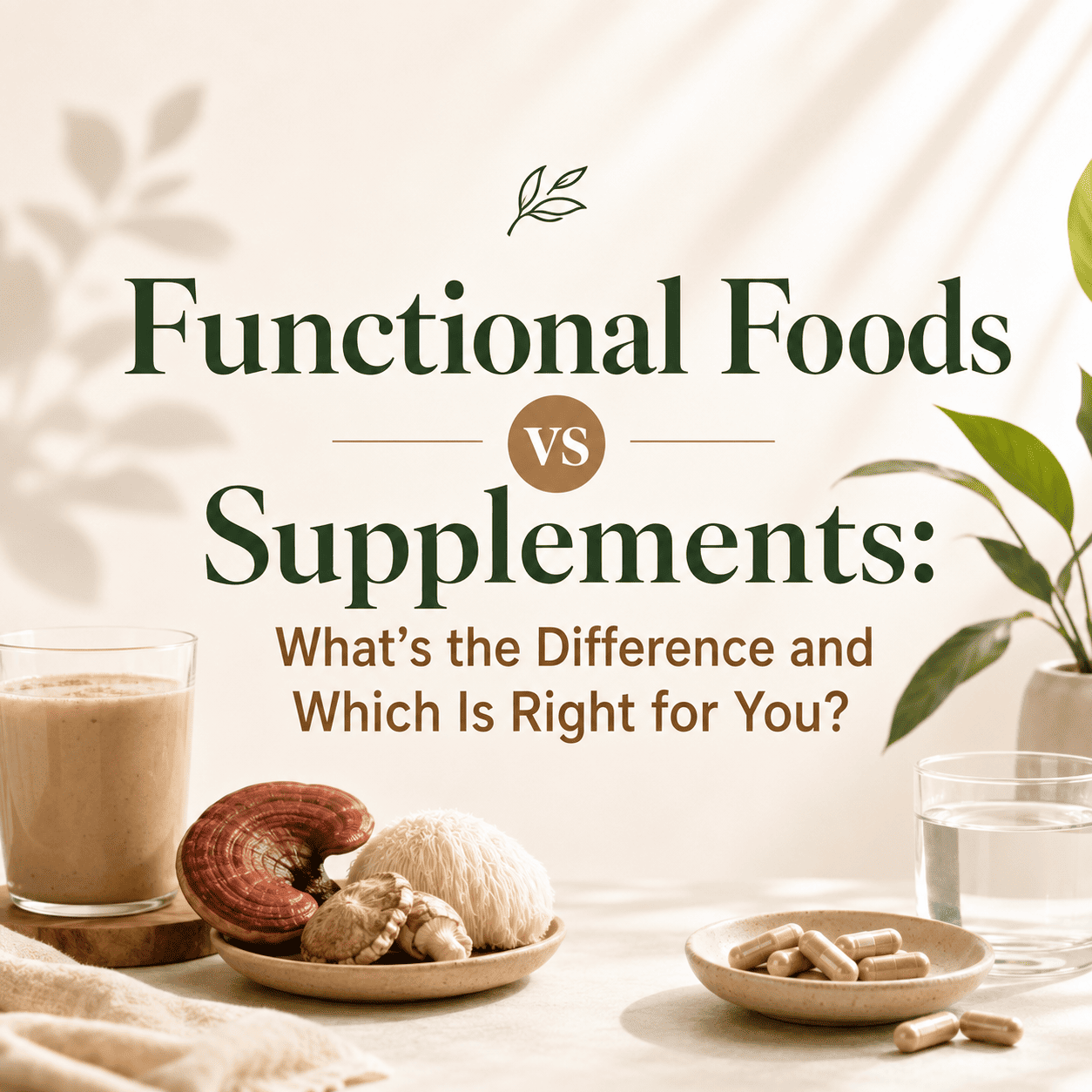
Functional Foods vs Supplements: What’s the Difference and Which Is Right for You?

Published: · Updated:
What is the difference between functional foods and supplements?
Functional foods are foods or drinks selected for nutritional and other health-related properties. Supplements are intended to complement dietary intake. The distinction depends on the individual product’s purpose, ingredients and labelling—not simply whether it is a powder, capsule or drink.
Neither format is automatically better. Choose using the product’s nutrition information, ingredient amounts, directions and your dietary needs.
Compare the product, not just the format
| What to check | Food or beverage | Supplement |
|---|---|---|
| Purpose | Consumed as part of meals, snacks or drinks | Intended to supplement dietary intake |
| Label information | Ingredients, serving size and nutrition information | Ingredients, amounts and recommended use |
| Useful comparisons | Sugar, energy, allergens and serving size | Ingredient identity, dose and evidence for the specific preparation |
| Important limitation | A functional ingredient does not make every food suitable for every person | A supplement does not replace a varied diet or prescribed treatment |
Does powder form mean a product is a supplement?
No. Foods and supplements can both be sold as powders. Use the specific product’s label and intended use to understand it. A mushroom food powder, a concentrated extract and a formulated supplement should not be assumed to have the same composition or serving size.
How should I choose?
- Identify the purpose: food enjoyment, nutrition or a specific dietary need.
- Check the complete ingredient list and allergen information.
- Compare amounts per serving, rather than pack size alone.
- Check whether research used the same ingredient preparation and population.
- Consider medicines and overlapping ingredients before combining products.
Can I use functional foods and supplements together?
Sometimes, but it is not a blanket recommendation. Check for duplicate ingredients and total intake. Ask a qualified healthcare professional when taking medicines, managing a medical condition, or unsure whether a combination is appropriate.
Can either replace a balanced diet?
No. The NIH Office of Dietary Supplements explains that supplements cannot replace the variety of foods important to healthy eating. They may have a role in particular circumstances, but more is not necessarily better.
Explore Grusonn’s product formats
Grusonn offers mushroom powders, supplements, bird’s nest products and cacao products. Read each product’s own specifications before choosing.
Browse the Grusonn collection · Learn how to assess functional mushroom products
Sources and scope
- NIH Office of Dietary Supplements: What You Need to Know
- NIH: Background Information on Dietary Supplements
These US educational resources explain general principles. They do not determine a Grusonn product’s Malaysian regulatory classification.
Published by Grusonn Wellness. This article provides general education. Research findings are distinguished from product specifications. For content or product questions, contact our team.